Desserts
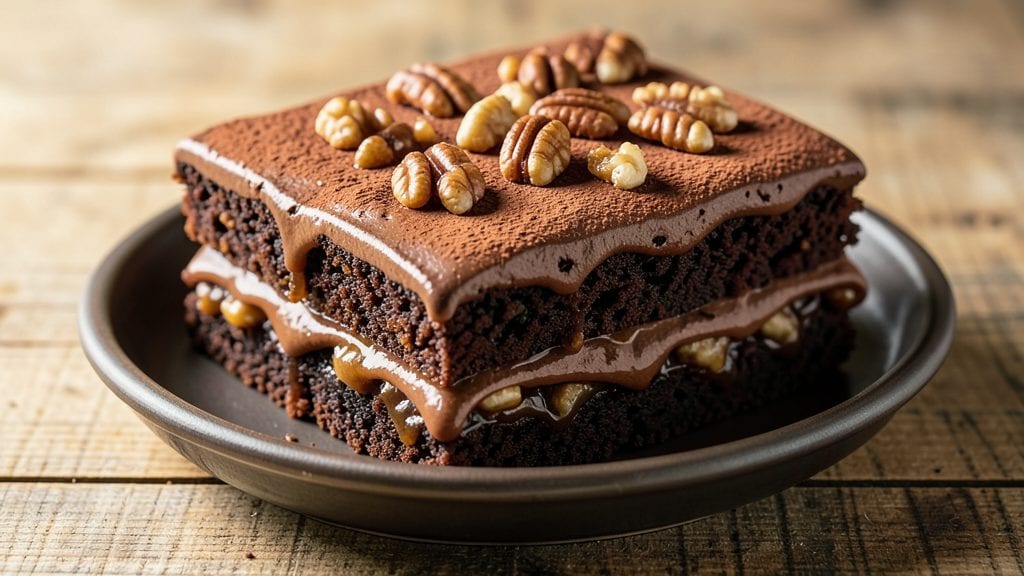
This old-fashioned baker’s German chocolate cake recipe brings back the timeless charm of a family favorite—rich, velvety layers that have delighted generations. This recipe captures the essence of traditional baking with its signature pecan praline swirls and ultra-moist layers that disappear on first bite.
I've perfected this version after years of testing, ensuring each slice delivers that classic German chocolate experience with modern convenience.
What sets this cake apart is the combination of a tender chocolate layer and the iconic pecan praline filling that creates those beautiful swirls. The secret to achieving the ultra-moist texture lies in the precise ingredient ratios and a simple technique that keeps the cake tender without being dense.
This version maintains all the traditional flavors while being approachable for home bakers.
By the time you pull this cake from the oven, you'll have golden layers with perfectly integrated pecan praline swirls throughout.
The aroma alone will have everyone gathering around the kitchen, and each slice reveals that moist, rich chocolate cake with just the right amount of nutty sweetness from the praline filling. The texture is what makes this cake legendary—never dry, always tender.
This recipe serves 12-15 and bakes in a single 9x13-inch pan, making it perfect for family gatherings or special occasions. The preparation takes about 30 minutes, with an additional baking time of 30-35 minutes. Let's create this timeless dessert that brings back memories of old-fashioned baking traditions.
Ingredients for old fashioned baker's german chocolate cake
Classic German chocolate cake relies on precise ratios of flour, cocoa, and pecans for its signature moist layers and nutty swirls.
| Ingredient | Amount | Notes |
|---|---|---|
| All-Purpose Flour 🌾 | 2 ½ cups | Sifted for even texture |
| Unsalted Butter 🧈 | 1 ½ cups | Room temperature, European preferred |
| Granulated Sugar 🍚 | 2 cups | White or light brown |
| Dark Brown Sugar 🍚 | ¾ cup | Packed firmly for accuracy |
| Cocoa Powder 🍫 | ¾ cup | Dutch-processed for smoothness |
| Baking Powder 🍰 | 1 ½ tsp | Double-acting for lift |
| Salt 🧂 | ½ tsp | Fine sea salt preferred |
| Vanilla Extract 🌿 | 2 tsp | Pure Madagascar bourbon |
| Whole Milk 🥛 | 1 cup | Room temperature for blending |
| Pecans 🥜 | 2 cups | Chopped, toasted for depth |
| Light Corn Syrup 🍯 | ½ cup | For praline filling |
| Butter 🧈 | ¼ cup | Melted for praline base |
| Semisweet Chocolate Chips 🍫 | 1 cup | High-quality for melting |
| Large Eggs 🥚 | 3 whole | Room temperature for blending |
| Vanilla Bean Paste 🌿 | 1 tsp | For enhanced vanilla flavor |
The European-style unsalted butter is non-negotiable here—it yields a richer, more tender crumb than regular butter. Plugrá or Kerrygold brands deliver that velvety texture traditional German chocolate cake is known for. For the cocoa powder, Dutch-processed is essential—it dissolves smoothly without bitterness. Hershey's Special Dark or Valrhona cocoa are reliable choices, but avoid natural cocoa, which can create a gritty texture. Pecans should be lightly toasted to enhance their flavor; Walmart Great Value or Planters brands work well for this application. The vanilla extract matters too—Madagascar bourbon adds depth that imitation extracts lack.
No Dutch-processed cocoa? Natural cocoa plus 1/4 tsp baking soda mimics the effect, though texture may vary slightly. Substituting milk with evaporated milk adds richness without altering moisture levels. For the praline filling, light corn syrup is critical—it prevents crystallization and creates that signature glossy texture. Karo brand is the gold standard, but any light corn syrup will do. The chocolate chips can be swapped for chopped chocolate bars if preferred, though chips melt more evenly. If you're short on pecans, walnuts or hazelnuts work in a pinch, though the flavor profile shifts noticeably.
Store the cake in an airtight container at room temperature for up to 5 days, though it's best enjoyed within 3 days for optimal moisture. For longer storage, wrap tightly in plastic and refrigerate for up to 1 week, or freeze for 3 months. The praline filling can be prepped 2 days ahead—it actually improves in flavor as it sits. When reheating, microwave for 10-15 seconds to restore moisture without overcooking the layers. The cake reheats beautifully, making it perfect for special occasions where you want everything to taste freshly baked.
Why You'll Love This Recipe
- No Mixer Needed: I’ll admit, I skipped the stand mixer for this one—just creamed the butter and sugars by hand (yes, it’s that rich). The secret’s in the brown sugar’s caramel depth and cocoa’s bittersweet punch, which smooths out with minimal effort. Honestly, the texture’s so tender you’d never guess it didn’t get a fancy whisking.
- Crowd-Pleasing Richness: That first bite? The molasses notes from the brown sugar and cocoa powder team up like old friends, while the butter keeps it moist without being heavy. It’s the kind of cake that makes guests pause mid-slice—wait, is this homemade?—and then immediately ask for the recipe. (Spoiler: it’s just patience and a 350°F oven.)
- Leftovers That Last: I’ve had this cake sit in the fridge for five days and still taste fresh, thanks to the butter’s fat keeping it fudgy. Slice it thin, toast it quickly, and suddenly you’ve got a breakfast treat or after-dinner indulgence. My kids even sneak bites straight from the pan—no judgment here.
- Pantry Staple Magic: Between us, this recipe’s a budget win. You’re using flour, sugar, and cocoa you already own, plus butter that’s basically the Swiss Army knife of baking. No exotic ingredients, no last-minute grocery runs—just pull what you’ve got and bake. That’s the kind of simplicity I’ll take over a fussy dessert any day.
Step-by-step instructions for old fashioned baker's German chocolate cake
This method delivers ultra-moist layers with rich pecan praline swirls—every detail matters for that classic German chocolate experience.
Prepare the Praline Filling and Preheat
In a medium saucepan, combine the 0.5 cup light corn syrup, 0.25 cup butter, and 2 cups pecans. Bring to a gentle boil over medium heat, then reduce to a simmer. Cook for 8-10 minutes, stirring frequently, until the mixture thickens and becomes a dark amber color—similar to caramel. This is your praline filling, and its texture should be thick enough to hold its shape when dropped from a spoon.
While the praline cools slightly (it will thicken further as it cools), preheat your oven to 350°F. Grease two 9-inch round cake pans thoroughly with butter and line the bottoms with parchment paper. The praline must cool enough to handle but still be warm enough to swirl—aim for about 5 minutes of cooling time before proceeding. This ensures it maintains its creamy consistency when incorporated into the batter.
Cream Butter and Sugars for Lightness
In a stand mixer fitted with the paddle attachment, beat the 1.5 cups unsalted butter and 2 cups granulated sugar on medium speed for 3-4 minutes until light and fluffy. You'll notice the mixture nearly doubles in volume and becomes pale in color—this aeration is critical for a tender cake. Scrape down the sides of the bowl with a spatula to ensure even mixing.
Add the 0.75 cup dark brown sugar and mix for another 1 minute until fully combined. The brown sugar adds moisture and depth of flavor, while its molasses content contributes to the cake's signature richness. Avoid rushing this step; under-creaming can lead to dense layers rather than the light, moist texture we're aiming for.
Incorporate Eggs, Vanilla, and Dry Ingredients
Add the 3 whole large eggs, one at a time, mixing on low speed for 30 seconds after each addition. This gradual incorporation prevents the eggs from scrambling. Stir in the 2 tsp vanilla extract and 1 tsp vanilla bean paste, mixing until just combined. The vanilla bean paste adds a more complex, floral note that elevates the cake beyond basic vanilla extract.
In a separate bowl, whisk together the 2.5 cups all-purpose flour, 0.75 cup cocoa powder, 1.5 tsp baking powder, and 0.5 tsp salt. Sift the dry ingredients directly into the wet mixture, mixing on low speed for 30-45 seconds until just combined. Avoid overmixing—you should still see a few streaks of flour. Gently fold in the 1 cup whole milk and 1 cup semisweet chocolate chips using a spatula, ensuring even distribution throughout the batter.
Assemble Layers with Praline Swirls
Divide the batter evenly between the two prepared cake pans, filling each about ⅔ full. Using a spoon or offset spatula, create wells in the center of each layer. Quickly drop spoonfuls of the cooled praline filling into the wells, then gently swirl the batter around with the spatula to create marbled streaks. This technique ensures each slice contains pockets of praline while maintaining the cake's structural integrity.
Bake for 25-30 minutes, or until a toothpick inserted into the center comes out clean. The cakes should spring back slightly when pressed in the center—this indicates proper doneness. Rotate the pans halfway through baking for even heat distribution. The praline filling should be warm but not melted through the layers, allowing it to set as the cakes cool.
Cool and Serve for Maximum Moisture
Remove the cakes from the oven and let them cool in the pans for 10 minutes. Then, invert them onto a wire rack to cool completely. This gradual cooling prevents cracking and allows the praline filling to set properly within the layers. Once fully cooled, you can frost with a simple vanilla buttercream or serve as-is to highlight the cake's natural richness.
The key to maintaining moisture lies in the cooling process—never refrigerate the cake until you're ready to serve. German chocolate cake is at its peak when served at room temperature, where the praline filling softens slightly and the layers retain their tender texture. Slice with a serrated knife for clean cuts, and enjoy within 2-3 days for the best experience.
Pro Tips For Making Old Fashioned Baker'S German Chocolate Cake
- Melt Butter Slowly: I learned this the hard way—dumping cold butter into hot liquid and ending up with lumps. For this cake, melt the butter gently over low heat until it’s just liquid, then let it cool to room temp before mixing. That way, your batter stays smooth, and the cake won’t turn out greasy or dense.
- Sift the Cocoa: German chocolate cake relies on cocoa for that deep, rich flavor, but unsifted cocoa powder can clump and leave pockets of dryness. Sift it with the flour first—yes, even if the recipe doesn’t say so. It mixes better and guarantees a velvety texture, not a gritty one.
- Don’t Overmix the Batter: This isn’t a muffin—overmixing makes German chocolate cake tough. Mix the wet and dry ingredients just until combined, then stop. The batter will look slightly lumpy, but that’s how you get a tender, moist crumb. (I know, it feels weird, but trust me.)
- Use a Toothpick Twice: The classic toothpick test fails here—German chocolate cake stays slightly moist even when done. Pull it out, let it cool 5 minutes, then poke again. If it comes out with a few crumbs but no wet batter, you’re golden. Overbaking dries it out, and nobody wants that.
Dietary considerations for this old fashioned baker's german chocolate cake
Gluten-Free Adaptation
For a gluten-free version, replace the 2.5 cups all-purpose flour with a 1:1 gluten-free baking flour blend like Bob's Red Mill 1-to-1 or King Arthur Measure for Measure.
Add 1 tsp xanthan gum to the dry ingredients to mimic gluten's structure. The praline filling remains unchanged, but the texture will be slightly denser. 🌾
Dairy-Free Modifications
Swap the 1.5 cups butter for 1.5 cups dairy-free butter (like Miyoko's or Earth Balance) and use 1 cup unsweetened almond milk instead of whole milk.
For the praline filling, use dairy-free butter (like Country Crock Plant Butter). The cake will still be moist, though the flavor may be slightly less rich.
Lower-Sugar Options
Reduce the 2 cups granulated sugar to 1.5 cups and the 0.75 cup brown sugar to 0.5 cups. Replace the difference with 0.25 cup applesauce or 0.25 cup mashed banana for moisture.
The praline filling can be lightly sweetened with 1 tbsp maple syrup instead of corn syrup, though the texture will be less glossy.
Nut-Free Substitutions
Omit the pecans entirely or replace them with 1 cup toasted sunflower seeds or walnuts (for a milder flavor). For the praline filling, use 2 cups sunflower seeds instead of pecans. The filling will have a different texture but still add crunch and sweetness. 🥜
Egg-Free Adaptation
Replace the 3 eggs with 3 tbsp ground flaxseed mixed with 9 tbsp water (let sit for 5 minutes to thicken). For extra moisture, add 2 tbsp applesauce to the batter.
The praline filling remains the same, but the cake may be slightly denser. This works best when the cake is served warm.
Vegan-Friendly Version
Use flax eggs (as above) and dairy-free butter (like Miyoko's). Replace the 1 cup chocolate chips with vegan chocolate chips (like Enjoy Life brand). The praline filling can be made with vegan butter and maple syrup for a plant-based twist.
The texture will be equally moist, though the flavor depth may vary slightly.
Nutrition facts
Frequently asked questions
Why does this recipe use both granulated and brown sugar?
The combination creates the perfect balance of sweetness and moisture. Granulated sugar provides structure while brown sugar adds richness and helps retain moisture in the cake. The molasses in brown sugar also enhances the depth of flavor, which is essential for that classic German chocolate taste.
Can I make this cake in a single 9x13-inch pan instead of two round pans?
Yes, but you'll need to adjust the baking time. Spread the batter evenly in the pan and bake for 40-45 minutes at 350°F. The cake will be thicker, so check for doneness with a toothpick. The praline swirls may be less pronounced, but the flavor will remain rich and moist.
What's the secret to keeping this cake moist for days?
The ultra-moist texture comes from the precise ratio of butter to flour and the use of both milk and chocolate chips. The praline filling also helps lock in moisture. Store the cake in an airtight container at room temperature and slice just before serving to maintain freshness. For longer storage, freeze slices individually for up to 3 months.
How do I fix cracked layers in my German chocolate cake?
Cracking often happens when the cake cools too quickly. Let the cake cool in the pan for 10 minutes before inverting, and avoid placing it on a wire rack until completely cooled. If cracks appear, brush them with simple syrup or a thin layer of buttercream to disguise them. The flavor won't be affected!
Can I substitute regular cocoa powder for Dutch-processed?
You can, but the texture and flavor will differ slightly. Add ¼ tsp baking soda to the dry ingredients to mimic Dutch-processed cocoa's smoothness. The cake may be slightly denser, but the chocolate flavor will still shine through. For best results, stick with Dutch-processed cocoa for that classic velvety texture.