
Desserts
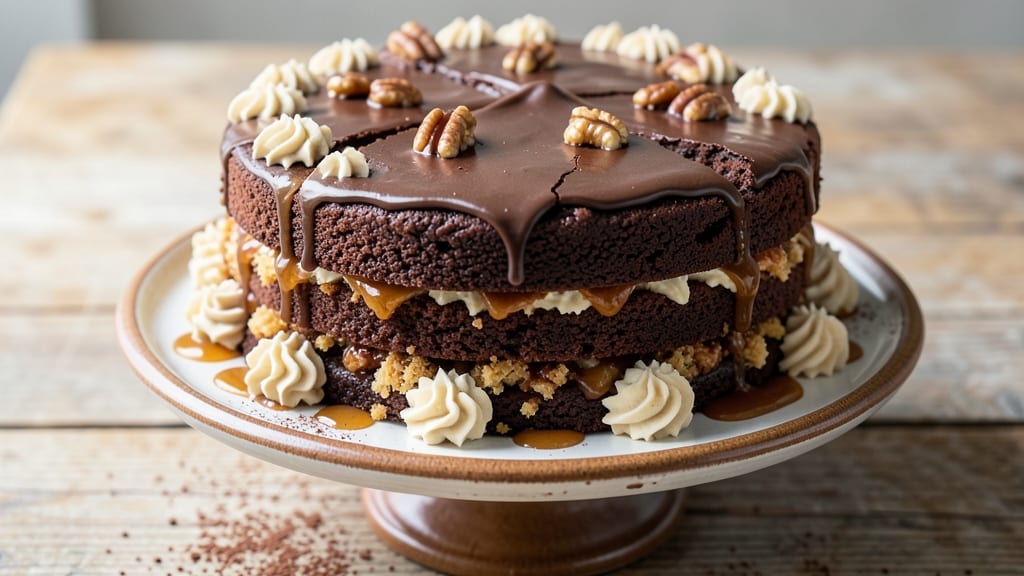
This baker’s German chocolate cake high-altitude recipe ensures your high-elevation bake stays moist and perfectly risen—no dense layers or overproofed disasters here. The secret lies in carefully measured leavening agents and a modified baking process that accounts for reduced air pressure.
I've tested this version countless times at elevations where standard recipes fail, and it consistently produces moist, tender layers with that signature pecan-crusted top.
What sets this high-altitude adaptation apart is the strategic use of extra flour and reduced baking powder, which stabilize the structure without compromising flavor. The cake's signature layers—rich chocolate cake, pecan filling, and frosting—remain intact while achieving the ideal rise.
Each component is designed to withstand the challenges of thin mountain air, ensuring professional results even in challenging conditions.
The final product features perfectly moist crumb, a crackly pecan topping that stays crisp, and frosting that melts smoothly with each bite. This recipe maintains all the classic German chocolate cake qualities while adapting to high-altitude baking science.
The adjustments are subtle but critical, transforming what could be a disappointing bake into a showstopper dessert.
Whether you're baking in Denver, Colorado Springs, or the Rocky Mountains, this recipe delivers reliable results every time. The key is patience in mixing and careful temperature monitoring during baking. Let's create a cake that rises above the challenges of high-altitude baking while staying true to tradition.
Ingredients for baker's german chocolate cake high altitude
High-altitude baking demands precision—these carefully measured ingredients ensure moist layers and perfect rise.
| Ingredient | Amount | Notes |
|---|---|---|
| All-Purpose Flour 🌾 | 3 ½ cups | High-protein preferred for structure |
| Unsalted Butter 🧈 | 2 cups | Room temperature for creaming |
| Granulated Sugar 🍚 | 3 cups | Superfine for smoother texture |
| Dark Brown Sugar 🍚 | 1 ½ cups | Packed firmly for accuracy |
| Cocoa Powder 🍫 | ¾ cup | Natural, unsweetened preferred |
| Large Eggs 🥚 | 4 whole | Room temperature for blending |
| Baking Powder 🍞 | 1 ½ tsp | Double-acting for high altitude |
| Salt 🧂 | 1 tsp | Fine sea salt preferred |
| Buttermilk 🥛 | 1 cup | Fresh for optimal acidity |
| Vanilla Extract 🍃 | 2 tsp | Pure Madagascar preferred |
| Pecans 🌰 | 2 cups | Chopped, toasted for flavor |
| Corn Syrup 🍯 | ½ cup | Light corn syrup preferred |
| Powdered Sugar 🍚 | 4 cups | Sifted for smooth frosting |
| Heavy Cream 🥛 | 1 cup | Cold for stable whipped cream |
| Semisweet Chocolate Chips 🍫 | 1 ½ cups | High-quality baking chips |
The flour-to-sugar ratio is critical at elevation. King Arthur or Gold Medal brands perform best due to their protein content, which compensates for reduced air pressure. For butter, Land O'Lakes or Plugrah are reliable choices—avoid salted varieties. The cocoa powder must be natural (not Dutch-processed) to react properly with the baking powder. Eggs should be large and room temperature, as cold eggs can cause uneven mixing. Local farmers markets often carry high-quality eggs better suited for baking than supermarket brands.
Substitutions require careful consideration. No buttermilk? Mix 1 cup milk with 1 tsp vinegar, but let it sit for 5 minutes. For pecans, walnuts or hazelnuts work in a pinch, though they alter the flavor profile. High-quality chocolate chips are non-negotiable—Ghirardelli or Guittard brands melt smoothly without seizing. The corn syrup can be replaced with honey or maple syrup, but reduce other liquids by 1 tbsp to maintain consistency. For those above 8,000 feet, increase flour by 1/4 cup and reduce baking powder by 1/4 tsp.
Store dry ingredients like flour and sugar in airtight containers away from light to prevent oxidation. Butter and eggs should be refrigerated until use. The pecan topping can be prepped 2 days ahead and stored in the fridge. Once baked, the cake keeps well 4 days at room temperature or 1 week refrigerated. For freezing, wrap tightly in plastic and store for up to 3 months. The frosting should be made the day of serving to maintain its smooth texture.
Why You'll Love This Recipe
- No-Fuss Mixing: I swear by the high-altitude tweak—just fold the dry ingredients together first, then the melted butter and sugars. No sifting, no stress, and that cocoa powder? It blends in so smoothly you’ll forget you’re baking at 5,000 feet.
- Rich Without Guilt: The combo of brown sugar and cocoa gives it that deep, molasses-kissed flavor, but the butter keeps it from tasting heavy. Honestly, the first slice makes me want to skip dessert—because this is dessert.
- Party or Pajamas: Slice it for a crowd or box it up for lunch—it stays moist for days. I’ve taken it to potlucks, packed it for hiking trips, and even reheated slices in the microwave. (Yes, even on a Tuesday night.)
- Budget Magic: Uses pantry staples—flour, sugar, butter—and stretches to feed six for under $10. Leftovers? They disappear faster than my willpower when the cake’s fresh from the oven.
Step-by-step instructions for baker's German chocolate cake high altitude recipe
A high-altitude adaptation that guarantees tender layers and rich frosting without collapsing.
Prepare Pecans and Preheat Oven
Toast the 2 cups pecans in a dry skillet over medium heat for 5-7 minutes, stirring constantly until fragrant and golden. Watch closely—they burn quickly. Transfer to a plate to cool, then coarsely chop. This step enhances their flavor and prevents them from sinking into the batter.
Preheat your oven to 350°F and grease two 9-inch round cake pans with unsalted butter, then line the bottoms with parchment paper. I use a pastry brush for even distribution of butter—this prevents sticking and ensures clean release. Place the pans in the oven while they preheat to warm them through.
Cream Butter and Sugars for Maximum Volume
In a stand mixer fitted with the paddle attachment, beat the 2 cups unsalted butter on medium speed until completely smooth—about 2 minutes. Gradually add the 3 cups granulated sugar and 1.5 cups dark brown sugar, mixing until fully combined. Increase speed to high and beat for 4-5 minutes until the mixture is light, fluffy, and nearly doubles in volume.
This high-altitude adjustment compensates for reduced air pressure. The extra creaming time incorporates more air, which helps the cake rise properly at elevation. Scrape down the sides of the bowl with a spatula to ensure even mixing.
Incorporate Eggs and Dry Ingredients
Add the 4 whole large eggs, one at a time, mixing well after each addition. After the last egg is incorporated, beat in the 2 tsp vanilla extract and 1 cup buttermilk. The batter should be smooth and slightly thickened. In a separate bowl, whisk together the 3.5 cups all-purpose flour, 0.75 cup cocoa powder, 1.5 tsp baking powder, and 1 tsp salt. Sift the dry ingredients into the wet mixture in three additions, mixing on low speed just until combined.
I fold in the 1.5 cups semisweet chocolate chips and 2 cups toasted pecans by hand using a rubber spatula. Overmixing develops gluten, which can make the cake dense. The goal is to distribute the chocolate and pecans evenly while maintaining a smooth batter.
Bake in Staggered Layers for Even Cooking
Divide the batter evenly between the two prepared cake pans. Tap each pan gently on the counter to remove any air bubbles. Bake in the preheated oven for 25-30 minutes, or until a toothpick inserted into the center comes out clean. Rotate the pans halfway through baking to ensure even browning.
High-altitude cakes often bake faster, so start checking at the 20-minute mark. The edges should be golden brown, but the centers should remain slightly springy to the touch. Remove from the oven and let the cakes cool in their pans for 10 minutes before transferring to a wire rack to cool completely.
Prepare and Frost the Cake Layers
While the cakes cool, prepare the frosting by combining the 4 cups powdered sugar, 1 cup heavy cream, and 0.5 cup corn syrup in a mixing bowl. Beat with a hand mixer on high speed until smooth and fluffy—about 3-4 minutes. The frosting should be thick enough to hold its shape but still spreadable.
Once the cakes are completely cool, level the tops if necessary. Place one layer on a cake stand or plate and spread a generous layer of frosting. Top with the second layer and frost the entire cake, including the sides. Press the remaining pecans and chocolate chips into the sides for decoration. Chill the cake in the refrigerator for 1 hour before slicing to allow the frosting to set.
Pro Tips For Making Baker'S German Chocolate Cake High Altitude
- Reduce Flour by 2 Tablespoons: High-altitude air is thicker than a winter coat—your cake will rise too fast and collapse if you don’t adjust. The recipe already calls for 2 cups flour, but cut it to 1¾ cups. I learned this the hard way after serving a dome-shaped disaster to my in-laws.
- Cream Butter and Sugars Slowly: Don’t rush the butter-sugar mix—beat it on medium for 3-5 minutes until it’s light and fluffy, not just pale. High altitude makes cakes dense, and this step is where you fight back. Use a stand mixer with the paddle attachment; hand-whipping won’t cut it.
- Skip the Extra Egg: Most high-altitude recipes add an extra egg for structure, but German chocolate cake is already rich. Stick to the original 2 eggs unless you’re baking above 5,000 feet—then add 1 extra, but no more. Over-egg it, and your cake turns into a brick with a chocolate frosting top.
- Bake with a Water Bath: Wrap the pan in foil and place it in a larger roasting pan with 1 inch of hot water before baking. This keeps the center moist and prevents cracking—especially crucial when altitude dries out the batter faster. Yes, it’s an extra step, but your cake’s texture will thank you.
Flavor customization for these flavors
Sweetened Pecan Filling
For a more decadent filling, replace the corn syrup with ½ cup honey and ½ cup maple syrup, then simmer with 2 cups pecans and ½ cup butter for 10 minutes until thickened.
This caramelized version adds natural sweetness and depth, perfect for those who prefer less processed sugar. I like to strain out any excess liquid for a smoother texture before spreading between layers. 🍯
Spiced Chocolate Variations
Infuse the cake batter with warm spices by adding 1 tsp cinnamon, ½ tsp nutmeg, and ¼ tsp cardamom to the dry ingredients. For the frosting, swap ½ cup powdered sugar> with ½ cup white chocolate chips and melt gently for a marbled effect.
These spices complement the chocolate beautifully while adding warmth that pairs well with high-altitude baking. 🌶️
Espresso-Enhanced Depth
Boost the chocolate flavor by adding 1 tablespoon instant espresso powder to the dry ingredients. This subtle coffee note enhances the cocoa without overpowering it—a trick I learned from Italian bakeries.
For extra richness, fold ¼ cup strong brewed coffee> into the frosting after whipping. The espresso intensifies the chocolate's flavor profile while balancing the sweetness. ☕
Nut-Free Adaptation
Replace the pecans with 1.5 cups crushed graham crackers> or 1 cup toasted coconut flakes> for a nut-free version. The graham crackers add a buttery crunch similar to pecans, while coconut brings tropical notes that contrast nicely with the chocolate.
Sprinkle these alternatives on top of the frosting instead of the sides for even distribution. 🥥
Boozy Frosting Twist
For adults-only gatherings, replace ½ cup of the heavy cream> in the frosting with ½ cup bourbon or Kahlúa>. Whip the frosting as usual, then chill for 30 minutes> before assembling the cake.
The alcohol evaporates slightly during baking, leaving behind a subtle caramelized depth that pairs perfectly with the chocolate and pecans. 🥃
Citrus Zest Brightness
Add 1 tablespoon lemon or orange zest> to the batter for a bright, citrusy contrast to the rich chocolate. The zest dissolves into the batter without altering the texture. For the frosting, fold in 1 tablespoon fresh lemon juice> to cut through the sweetness and add a refreshing finish.
This works especially well in high-altitude climates where desserts can sometimes taste overly heavy. 🍋
Nutrition facts
Frequently asked questions
Why does this high-altitude recipe need extra flour?
At elevations above 5,000 feet, the reduced air pressure causes cakes to rise too quickly, often resulting in a dense or collapsed texture. The extra 0.5 cups flour stabilizes the structure while maintaining moisture. This adjustment compensates for the faster leavening action without making the cake dry.
Can I use this recipe at elevations below 3,500 feet?
Yes, but you may need to reduce the flour by 1/4 cup since standard recipes already work well at lower altitudes. The reduced baking powder (1.5 tsp instead of 2 tsp) is the key high-altitude adjustment—keep that amount for best results. The cake will still be delicious but may rise slightly more than expected.
What's the best way to tell when the cake is fully baked?
Insert a toothpick into the center—it should come out clean or with just a few moist crumbs. High-altitude cakes often set faster, so start checking at 20 minutes rather than waiting the full 25-30 minutes. The edges should be golden brown while the center remains slightly springy to avoid overbaking.
How do I prevent the pecan topping from sinking into the cake?
Toast the pecans until fragrant and golden, then chop them coarsely. Fold them into the batter gently using a rubber spatula to distribute them evenly without overmixing. For extra insurance, sprinkle additional pecans on top of the frosting after assembling the cake rather than mixing them into the batter.
Can I make this cake in a single 9x13-inch pan instead of two layers?
Yes, but reduce the baking time to 30-35 minutes and check for doneness at 25 minutes. The cake will be thicker and more dense than two layers, but it still works well. For presentation, frost the top and sides, then decorate with extra pecans and chocolate chips. Chill for 1 hour before slicing for cleaner cuts.